Denarius
Silver (argentum) · ~3.4g · ~90% pure
211 BC – AD 244
The backbone of the Roman economy for five centuries. Worth four sestertii, the denarius was the coin of everyday trade, army pay, and taxation. Its slow debasement — from near-pure silver under Augustus to bronze with a silver wash by the 270s AD — tells the story of Rome's economic crisis in one handful of coins.
Specifications
| Metal | Silver (argentum) |
| Typical weight | ~3.4g |
| Typical purity | ~90% |
| Era | 211 BC – AD 244 |
Silver Purity by Emperor — The Debasement Story
The denarius began under Augustus at ~97% silver. Over three centuries, successive emperors reduced its silver content to fund wars and donatives. By the reign of Gallienus (~AD 260) it contained barely 5% silver — a coin in name only. This debasement is the single most important economic story in Roman numismatics.
⚠️ Approximate values — verify against Butcher & Ponting The Metallurgy of Roman Silver Coinage before launch.
Example Coins
Antoninus Pius
RIC III 492
Antoninus Pius
RIC III 320
Antoninus Pius
RIC III 316
Antoninus Pius
RIC III 11C
Antoninus Pius
RIC III 334A_DENARIUS
Antoninus Pius
RIC III 16
Antoninus Pius
RIC III 15
Antoninus Pius
RIC III 14B_DENARIUS
Antoninus Pius
RIC III 334C
Antoninus Pius
RIC III 334B_DENARIUS
Antoninus Pius
RIC III 9C
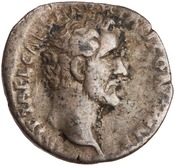
Antoninus Pius
RIC III 9A